
Hip Hinge & Deadlift: The Movement Your Back Loves
The 30-second answer
The deadlift is not a back killer but its trained opposite: the pattern you use to lift every box, child and crate — hips back, back long, power from glutes and hamstrings. In studies, supervised deadlift training has even been used successfully as an exercise FOR back pain. The rule is the same as everywhere: technique before load, stepwise progression — and anyone with current back problems clears the start with a doctor or physiotherapist first.
The key points at a glance
| Area | Evidence | Statement |
|---|---|---|
| Posterior chain (glutes, hamstrings, back) | A | Electromyography reviews confirm: the deadlift and its variants activate the entire posterior chain — exactly the musculature a sitting lifestyle neglects most. |
| Everyday lifting transfer | A | The hip-hinge pattern is the technique behind every safe lift in daily life. Train it progressively and it shows up automatically in the moving-box moment — capacity included. |
| Use in back pain (supervised!) | B | Surprising to many: in Swedish studies, supervised deadlift training was used successfully in selected patients with non-specific low back pain — with improvements in pain and function. A recent meta-analysis (2025, 13 RCTs) frames this realistically: loaded training is safe for chronic low back pain, but the added benefit over unloaded training is small and mostly appeared only after more than seven weeks — patience belongs in the expectation. That is physiotherapy context, not a self-treatment manual — but it shows how wrong the fear image is. |
| "Deadlifts ruin your back" | — | Honest no to the myth: the danger is not the exercise but too much load on too little technique — true of every exercise. With progression from hinge drill to dumbbells to barbell, the deadlift is as trainable as any other fundamental pattern. |
| A mandatory heavy lift for everyone | — | This belongs to honesty too: nobody MUST pull heavy from the floor. Romanian deadlifts, hip thrusts or kettlebell variants train the same pattern — the best variant is the one that fits your body and history. |
Evidence grades: A = strongly supported · B = supported in the right context · C = emerging/mixed evidence · D = experimental · — = no proven benefit. Quoted statements with a regulation number are officially reviewed health claims authorised by the EU — we use only those.
Understanding the pattern: hips, not back
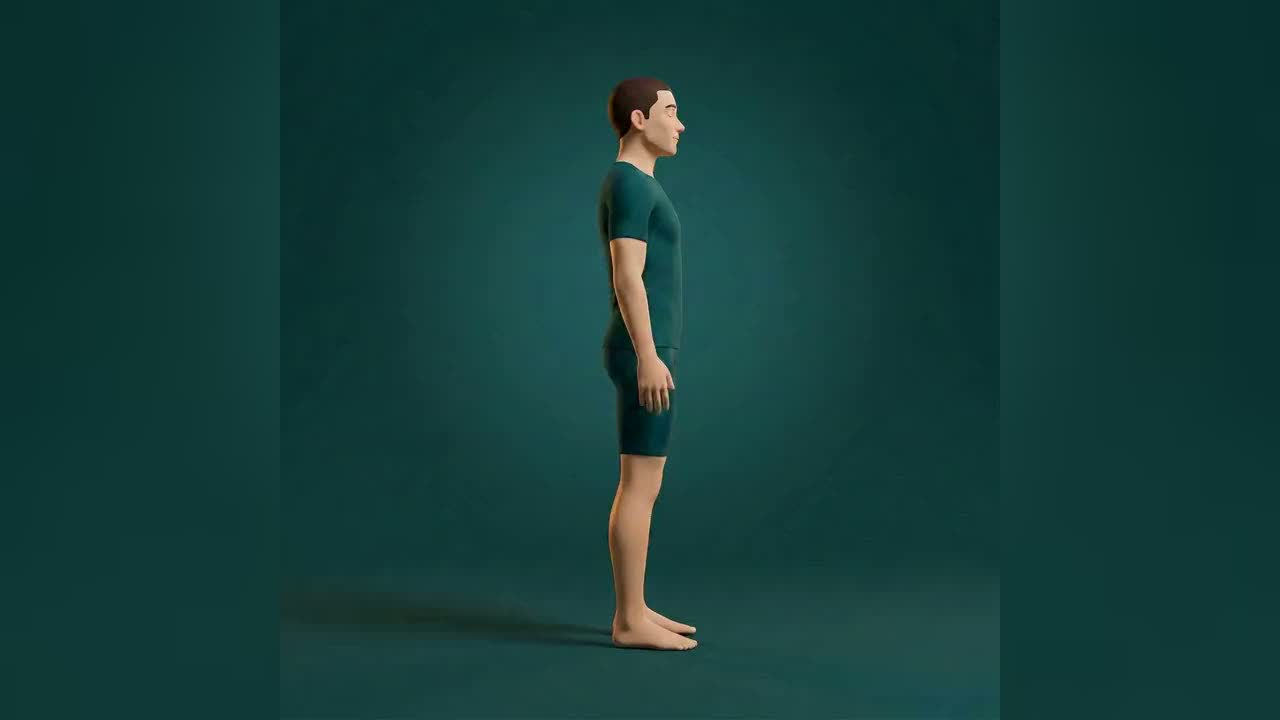
The core of the hip hinge: hips push back, the torso tilts forward with a long back, and the power comes from glutes and hamstrings — not from rounding the spine. The difference to the squat: there the knees bend deeply and the torso stays more upright; in the hinge the knees stay softer and the hips do the travelling. Both patterns belong in training because they cast different muscles in the lead roles.
The everyday test: watch how you lift something heavy off the floor next time. Rounded back with straight legs? That is exactly the habit deadlift training rewires.
What research says about the fear image
The deadlift carries the image of a risk exercise — the research tells a different story. In a Swedish research series, supervised deadlift training was deliberately used in patients with non-specific low back pain and compared against individualised low-load motor-control exercises: both groups improved, and the follow-up analysis worked out which patients benefited most from deadlifting (among others, those with lower baseline pain intensity and better trunk endurance). The sober translation: the exercise itself is no enemy of the back — under guidance it can even be part of the solution. A more recent meta-analysis (2025, 13 RCTs) offers a realistic expectation here: loaded training is safe for chronic low back pain, but its added benefit over unloaded training is small and takes time — in the studies reviewed it mostly appeared only after more than seven weeks of consistent training.
Important for honesty: these were physiotherapist-led programmes with selection and supervision. If you currently have back pain, take that as a reason for professional guidance — not as a free pass (our back dossier frames the bigger picture).
Technique: the four points that count
- Hips start: the movement begins by pushing the hips back — as if closing a door behind you with your glutes. The knees bend along, but they do not lead.
- Back long, not stiff: one long line from tailbone to the back of the head — no forced arch, no rounding. The gaze follows the movement (diagonally forward-down), not the mirror.
- Load close to the body: kettlebell or beverage crate — the closer to the shins, the shorter the lever, the friendlier for the back. That is half the entire exercise.
- Stand fully tall at the top, don't lean back: the end position is upright standing with tensed glutes — leaning past vertical adds nothing and only costs.
The progression
- Stage 1 — hinge drill without load: with a broomstick along the back (contact: back of head, mid-back, sacrum), practise pushing the hips back until all three contact points hold through every rep.
- Stage 2 — Romanian deadlift with dumbbells: lower from standing to mid-shin, feel the hamstring tension, stand back up. The friendliest loaded entry.
- Stage 3 — kettlebell deadlift from the floor: compact, centred, ideal for learning the floor start.
- Stage 4 — barbell: once the earlier variants are clean and stable. An elevated start (blocks/plates) makes the entry even more joint-friendly until mobility clears the full range.
Dose it with the RPE principle — with an especially generous technique reserve here, because fatigue blurs form faster in the deadlift than in any other lift. And as always: pain beyond muscle burn is a stop signal; recurring complaints deserve a professional look.
Sources
- 1. Aasa et al. — Individualized low-load exercises versus high-load lifting exercise (deadlift) in low back pain (JOSPT 2015) — Accessed on: 2026-08-21
- 2. Berglund et al. — Which patients with low back pain benefit from deadlift training? (JSCR 2015) — Accessed on: 2026-08-21
- 3. Martín-Fuentes et al. — Electromyographic activity in deadlift exercise and its variants: systematic review (PLoS One 2020) — Accessed on: 2026-08-21
- 4. Swinton et al. — Biomechanical analysis of straight and hexagonal barbell deadlifts (JSCR 2011) — Accessed on: 2026-08-21
- 5. Meta-analysis (2025, 13 RCTs) — loaded training in chronic low back pain: safety and added benefit vs. unloaded training — Accessed on: 2026-08-26
Dietary supplements are not a substitute for a balanced, varied diet and a healthy lifestyle. This article is for information purposes only and does not replace medical advice.