
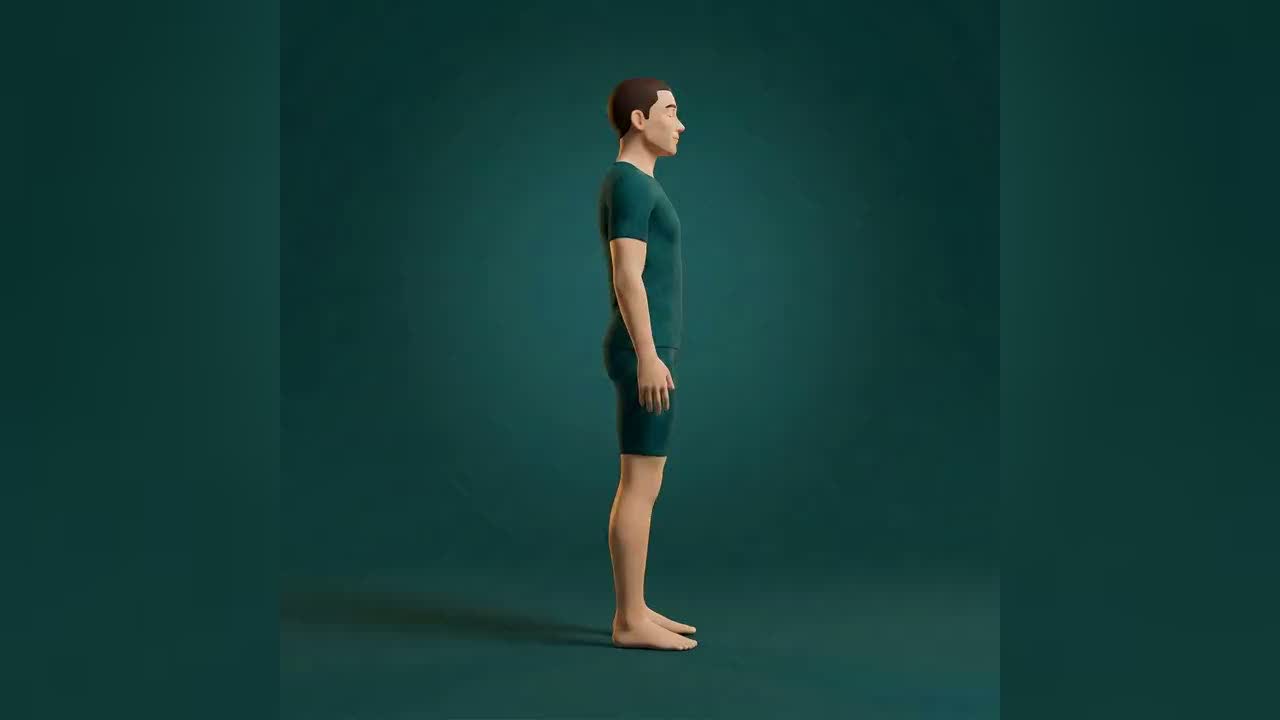
The Squat: Why the King of Exercises Earned Its Title
The 30-second answer
The squat is the movement behind standing up, sitting down, lifting and stairs — which makes it probably the most transferable exercise there is. The two biggest myths are biomechanically settled: deep squats with clean technique and appropriate load are not more harmful than half squats, and knees are allowed to travel past the toes — that is normal mechanics. What matters is technique before load, and a progression that starts at the box, not at the barbell.
The key points at a glance
| Area | Evidence | Statement |
|---|---|---|
| Leg & glute strength | A | Undisputed: the squat trains the biggest muscle groups in the body — thighs, glutes, trunk — in one pattern. Hardly any other movement offers more muscle mass per minute of exercise. |
| Everyday transfer | A | Getting up from a chair, out of the car, off the toilet — that IS a squat. Training it means literally training the movement that decides independence in older age. |
| "Squats wreck your knees" | — | Biomechanical reviews defuse the myth: with clean technique and gradual habituation, even deep squats are no knee killer — joint forces stay within tolerable ranges, and blanket fear of the deep position is not justified. |
| "Never let the knees pass the toes" | — | The classic among fitness myths: in a deep squat, most people's knees naturally travel past the toes. Artificially holding them back merely shifts load onto hips and lower back — analysing this compensation is a core finding of squat biomechanics. |
| Fast muscle without technique | — | Honest no: the squat rewards patience. Put load before technique and you collect compensation patterns instead of muscle — and they get more expensive with every kilo. |
Evidence grades: A = strongly supported · B = supported in the right context · C = emerging/mixed evidence · D = experimental · — = no proven benefit. Quoted statements with a regulation number are officially reviewed health claims authorised by the EU — we use only those.
Why this pattern comes first
Of the five fundamental movements (squat, push, pull, hinge, brace — all in our form check), the squat has the biggest everyday account: every day contains dozens of them whether you train or not. The only question is whether you perform them strong and controlled or weak and accidental. That is why it sits in nearly every serious programme — not out of tradition but out of transfer.
The two myths, settled
Myth 1: "Deep is dangerous." The biomechanical review by Hartmann and colleagues concludes the opposite: with clean technique and gradually built load, deep squats pose no increased wear risk for knees or spine — the more problematic pattern is heavy loads in half positions, because far more weight can be moved there. Depth is not a dare but a question of mobility and habituation: as deep as you can control, with the goal of expanding that range over months.
Myth 2: "Knees never past the toes." The rule dates from an era when knee shear forces were viewed in isolation. Kinematic analyses show: hold the knees back artificially and the torso pitches further forward, shifting load to hips and lower back. Knees over toes is normal anatomy in deep squats — what matters is that the knees track stably toward the toes and do not cave inward.
Technique: the five points that count
- Stance: about shoulder width, toes slightly out (10–30 degrees) — the exact position is individual; it is right when the movement feels free.
- Whole foot on the floor: pressure spread across heel and ball — the toes do not claw the ground in panic.
- Knees follow the toes: on the way down and up. Inward caving is the single most important correction point.
- Long trunk, no arch: breastbone points forward-up, the back keeps its natural shape — no active overextension.
- Tempo: controlled down (2–3 seconds), powerful up. Dropping is not a repetition, it is a fall with an audience.
How hard the sets should be is in the RPE guide — for the squat especially: a technique reserve is mandatory, and the last shaky rep does not belong in the programme.
The progression: from box to barbell
- Stage 1 — box squat: sit down onto a bench or sturdy chair and stand back up, controlled, without momentum. The best start for beginners, higher body weight and knee history — which is exactly why our app uses it as the safe variant.
- Stage 2 — body weight: free squats, increasing depth over weeks; as a counterweight aid, reach the arms forward or hold a small weight at the chest (which paradoxically makes squatting easier).
- Stage 3 — goblet squat: dumbbell or kettlebell at the chest. Fully sufficient for most trainees for months — and the best technique teacher there is.
- Stage 4 — barbell: once goblet squats with respectable weight are clean. Start with the empty bar, progress per the RPE guide's principle.
Respect the limits: pain beyond muscle burn is a stop signal, and with existing knee, hip or back problems the loading question goes to a doctor or physiotherapist first. More on training with osteoarthritis: osteoarthritis dossier.
Sources
- 1. Hartmann et al. — Analysis of the load on knee joint and vertebral column with changes in squatting depth (Sports Med 2013) — Accessed on: 2026-08-21
- 2. Schoenfeld — Squatting kinematics and kinetics and their application to exercise performance (JSCR 2010) — Accessed on: 2026-08-21
- 3. Faigenbaum et al. — Youth resistance training position statement (technique-before-load principle) — Accessed on: 2026-08-21
Dietary supplements are not a substitute for a balanced, varied diet and a healthy lifestyle. This article is for information purposes only and does not replace medical advice.