
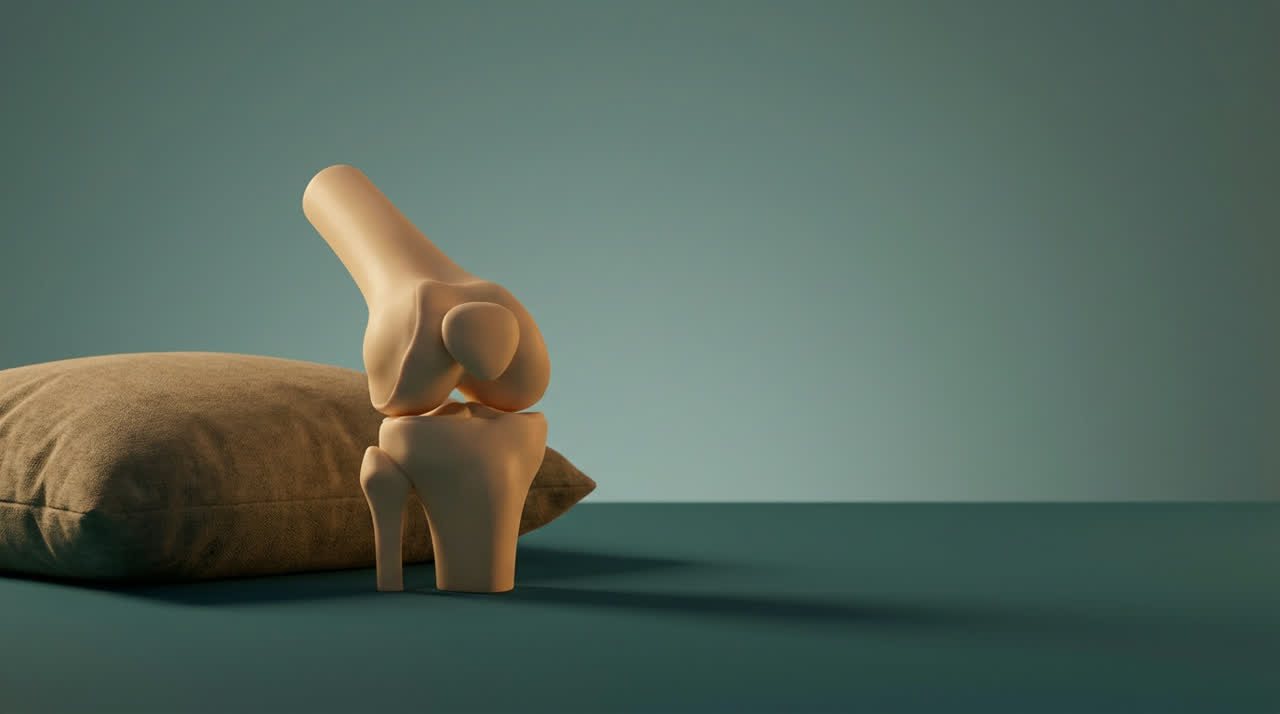
Understanding Osteoarthritis: Movement, Not Rest
The 30-second answer
Osteoarthritis does not mean standing still: the top recommendation of modern guidelines is exercise and strengthening — resting usually makes things worse. Painkillers and injections belong in medical hands, and cartilage miracle cures do not exist. What you can do yourself is a lot: train, unload the joints, keep going.
What's proven — and what isn't
| Area | Evidence | Statement |
|---|---|---|
| Training & strengthening | A | The core recommendation of virtually every treatment guideline: regular strength and movement training can reduce pain and improve function — it is first-line therapy, not an optional extra. A large 2025 network meta-analysis (BMJ, 217 randomised trials on knee osteoarthritis) found that joint-friendly aerobic training delivered the most consistent effects on pain and function — at least on equal footing with strengthening, not secondary to it. |
| Unloading joints (body weight) | B | Less load means measurably less stress on knees and hips with every step — weight management is a fixed building block in the guidelines. How and how fast: individually, and without miracle diets. |
| Physiotherapy & education | B | Guided exercise and understanding what happens in the joint demonstrably improve how people cope — knowledge is part of the treatment here. |
| Glucosamine & chondroitin | — | The sobering evidence: no reliable benefit has been shown in high-quality studies — independent reviews and guidelines mostly advise against them. The shelf classic that rarely delivers. |
| Collagen supplements | C | A few small studies, no robust overall evidence. If you try it, know this: the proof is pending — and biologically, cartilage cannot be “fed back on”. |
| Turmeric | C | Signals of symptom relief in studies of mixed quality. Not a standard, interactions possible (especially with blood thinners) — check with your doctor before taking it. |
| “Rebuild your cartilage” | — | The clear no: no supplement and no cream regrows lost cartilage. Anyone promising that is selling hope — not science. |
Evidence grades: A = strongly supported · B = supported in the right context · C = emerging/mixed evidence · D = experimental · — = no proven benefit. Quoted statements with a regulation number are officially reviewed health claims authorised by the EU — we use only those.
What osteoarthritis is
Osteoarthritis is the most common joint disease: the joint cartilage — the gliding layer between the bones — becomes thinner and rougher over years, often accompanied by irritation of the joint capsule. Knees, hips, fingers and ankles are affected most. Important: osteoarthritis is not simply “old age” — genetics, previous injuries, chronic overload and excess weight all play a role. And: X-ray findings and symptoms often match surprisingly poorly — some people with marked findings have little pain, and vice versa.
The biggest misconception: “just rest it”
The most understandable reflex with joint pain is to rest — and it is exactly what tends to make things worse long term: the muscles that guide and cushion the joint get weaker; the cartilage, which feeds itself through cycles of loading and unloading, is nourished less; and fear of movement grows.
That is why modern guidelines are so unambiguous: with osteoarthritis, movement is not a risk — it is therapy. “Load yes, overload no” — and the difference can be learned.
What guidelines actually recommend
The treatment pyramid starts neither in the operating theatre nor at the pharmacy, but with three basics: exercise (strength + mobility + endurance), weight management where needed, and patient education — understanding what helps and what harms. Only then come painkillers (medically supervised), possibly injections, and, as the last step, joint replacement.
For you this means: the most effective part of the treatment is in your own hands — and it costs nothing but consistency.
Training with osteoarthritis: the practical version
Strength and endurance work are equal-footing building blocks here, not a staged plan — a 2025 network meta-analysis of 217 randomised trials even found the most consistent effects on pain and function for joint-friendly aerobic training.
- Strength: Strong thigh and hip muscles unload the knee with every step. Start with simple exercises (sit-to-stand from a chair, supported lunges, leg press) and progress slowly.
- Joint-friendly cardio: Cycling, swimming, brisk walking — low-impact movement is the ideal entry; running volume only after adaptation, guided by symptoms.
- The 24-hour rule: Some pulling during exercise is fine. If a joint hurts clearly more or swells the next day, it was too much — go one step smaller next time, do not stop.
- Mobility daily: Short mobilisation keeps the capsule supple — five minutes is a fine start.
Supplements for osteoarthritis: the honest picture
Few conditions sell as many capsules. The short version of the independent assessments: glucosamine and chondroitin have shown no reliable benefit in high-quality trials. Collagen is popular but thinly supported. Turmeric shows hints of symptom relief with mixed study quality and possible interactions. None of it regrows cartilage.
Our line stays the same here: no purchase links, no recommendations — and the reminder that any supplement needs to be cleared with your doctor or pharmacist if you take medication.
When to see a doctor promptly
- With a suddenly swollen, hot or reddened joint — that is not typical osteoarthritis, it needs evaluation.
- With new or rapidly increasing pain at rest or at night.
- After a fall or accident with persistent symptoms.
- And for the diagnosis itself: “osteoarthritis” is a medical finding — not the result of an internet search. With a confirmed diagnosis, training also feels a lot less scary.
Sources
- 1. NIAMS (NIH) — Osteoarthritis: Basics, Symptoms, Treatment — Accessed on: 2026-08-16
- 2. Cochrane — Exercise for osteoarthritis of the knee — Accessed on: 2026-08-16
- 3. NCCIH (NIH) — Glucosamine and Chondroitin for Osteoarthritis — Accessed on: 2026-08-16
- 4. NCCIH (NIH) — Turmeric: Usefulness and Safety — Accessed on: 2026-08-16
- 5. gesundheitsinformation.de (IQWiG) — Osteoarthritis (German health information service) — Accessed on: 2026-08-16
- 6. Yan et al. — Comparative efficacy and safety of exercise modalities in knee osteoarthritis: network meta-analysis of 217 RCTs (BMJ 2025) — Accessed on: 2026-08-26
This dossier is independent information and no substitute for medical diagnosis or treatment. For symptoms or questions about your thyroid, medication or supplements, talk to your doctor or pharmacist. This article deliberately contains no product advertising and no purchase links.